GAPS Diet Journey Logo

Blog

  • Review: Energy Budget (How to Manage Your Home Even with Low Energy)

    Review: Energy Budget (How to Manage Your Home Even with Low Energy)

    Energy Budget

    I’ve had low energy my entire life. As a child, I spent a great deal of my free time reading books. I needed glasses from the age of nine and I can still remember the optometrist saying “There’s more to the world than one square foot” meaning I should stop reading so much.

    I had an extreme dislike for physical education. I still don’t like exercise to this day. As an adult, I’ve struggled to keep my home in order. As a young mother I found the SHE (Sidetracked Home Executives) System and could really relate. A couple decades later I tuned in to FlyLady, who is licensed to use Pam and Peggy’s SHE system. Eventually, I realized these systems only worked for me during the times when I had “bursts of energy” which were far and few between. When I finally felt energetic again, it was so overwhelming that I didn’t know where to start. And things were so far out of control that I knew my energy wouldn’t last long enough anyway, so I ended up feeling hopeless.

    In my mid-30s, I remember being at a friend’s home… her daughter and I were trying to solve a computer issue. After not too long, the young woman stood and stretched, claiming she had to get up and move. I remember thinking “kids these days” and how they have no staying power… thinking I had a lot of stamina for staying planted in that computer chair and doggedly pursuing the solution.

    Enter GAPS… my energy levels improved, which made me realize it wasn’t stamina that allowed me to sit at a computer for hours on end, but low energy!!

    I do have more energy, but not as much as I need. I still struggle with housework and getting everything done, and am always looking for help with staying on top of housework. Recently I’ve been working my way through an e-course which is designed specifically for those of us struggling to get what needs to be done in spite of our low energy. One thing I can tell you from living with low energy – some things are best tackled daily, even if they seem low priority.

    Tackle Some Things Even Though They Seem Low Priority

    Three examples:

    1. Brush my hair daily (7 minutes): I have long straight hair. Low energy is one of the main reasons I allow my hair to grow long. It’s the easiest way for me to manage my hair. Twist it up in a bun every morning, takes 10 seconds. Voila! I wash my hair once a week. I don’t have to fuss with blow drying, styling or going someplace to get my hair cut. However, it tangles easily, especially if I wash my hair and don’t brush after it’s dried. Brushing my hair is something that I need to spend 2 minutes on every morning and 5 minutes in the evening (brushing and braiding, yes, I timed it). It’s so easy to twist my hair into a bun every morning (without brushing) and then let it down to sleep. But doing this means my hair bevomes more tangled each night. THEN it hurts to brush! When it gets to this point, I have to wait until I’m in the right mood to be able to handle the inevitable pain from removing the tangles. For me, it actually causes me to feel stressed and depletes my energy to have to remove tangles.
    2. Swish the toilet every day (under 1 minute): I have finally learned that due to our hard water and the fact that we allow “yellow to mellow” I absolutely must swish the toilet bowl at least once every day. Even with scrubbing the bowl daily, calcium and lime begins to take hold so once a week I pour in a couple tablespoons of vinegar and leave sit overnight. Doing this under 1-minute chore once daily prevents me from having to scrub by hand (since I refuse to use toxic chemicals).
    3. Rinse pots, pans, dishes immediately (3 minutes): Making dinner from scratch (as we do much of the time on GAPS) can take a lot of energy leaving one exhausted when it comes time to do the dishes. At minimum, rinse dishes, pots and pans as soon as you are done with them. Otherwise the food sticks and now you have to scrub, or leave them soaking for awhile. I don’t recommend filling the sink with water and dishes – if you run out of energy, the water can become gross and stinky before you get to it.

    The Energy Budget: Time Management for the Chronically Ill (And Others With Long-Term Roadblocks)

    Energy Course

    The Energy Budget e-course was created by Rachel Ramey, the blogger at Titus 2 Homemaker. Here’s what Rachel says in Module 1: “I suffer from chronic illness myself. It wasn’t too bad at first, so I just slowed down, but over time my condition became worse – and so did the condition of my house. One day I looked around and thought, “this isn’t working“. See, I had a plan for keeping my home running (fairly) smoothly, but I was no longer able to work the plan. I needed to find a new plan that was designed to work around my unpredictable energy levels.” 

    Reading Rachel’s words… that could have been me. When I entered the workforce again after being a stay at home mom for five years I started out working three days a week, now I’m working five days. My job is stressful and I often feel drained emotionally and physically and I definitely need to make adjustments for my energy levels. After a particularly grueling week, I sometimes find it’s necessary to spend all day Saturday or Sunday (sometimes both days) in bed, which is incredibly frustarting but occasionally that’s what I have to do in order to recover for the past week and regroup for the upcoming week.

    Maybe you don’t have a chronic illness. Although this course was written with the chronically ill in mind, there are others in similar situations who may find some of these strategies useful. Hard pregnancies, recovery from injury, lengthy-but-not-chronic illnesses such as mononucleosis, parenting chronically ill kids, even being a first-time parent and learning this very important job on the fly, managing a full-time job with low energy and keeping a home in order, etc. – these are all situations where the standard methods don’t always work.

    In the Energy Budget e-course, Rachel is going to guide you through figuring out what needs to be done in your home, how important it is for you and your family and most importantly taking your energy levels into consideration.

    The Concept of an Energy Budget

    Most households have financial budgets, but the idea of an “energy” budget is a concept that is rarely considered. Most of us recognize that we typically have a finite amount of money to work with, but we seldom recognize that our energy has varying levels. Especially if you have low energy, I’ve noticed that most of us with chronic illness or low energy work ourselves to exhaustion, but continue to push ourselves, trying to meet certain standards.

    The Energy Budget e-course takes your level of energy into consideration when determining what needs to be done to keep your home comfortable. Rachel also realizes what needs to be done vs. what can slide a bit is going to vary from one home to the next. For example, maybe dusting and removing cobwebs is something that you can put off for awhile; unless you’re one (or maybe has a family member) who has an allergy to dust mites. Then it will need to go much higher on your priority list.

    Rachel is going to help you figure all this out in the Energy Budget e-course. Here are the modules you’re going to see along with a brief description:

    Introduction
    Why This Course? Minimum Maintenance and Budgeting Strategies

    Strategy 1: Fixed / Variable Fixed / Optional Expenditures
    Determining what MUST be done (fixed) vs. what can be done sometimes and what is optional.

    Strategy 2 – Prioritizing
    What’s most important for you and Tweaking the Method

    Strategy 3 – Minimum “Income” (Energy)
    Figuring out your energy levels

    Strategy 4 – Dual Budgets
    Two strategies for low energy vs. higher energy times

    Strategy 5 – Saving Excess
    Using the energy surge on the “good days”

    Strategy 6 – Budget Cuts
    Minimize the effort for getting chores done

    Click here to check out the Energy Budget.

    Energy Budget Rachel Ramey

    Do you have a chronic illness and low energy? Do you find it a challenge to get everything done? What has helped you? 


    GAPS DIET JOURNEY is a participant in the Amazon Services LLC Associates Program, an affiliate advertising program designed to provide a means for sites to earn advertising fees by advertising and linking to AMAZON.COM. GAPS DIET JOURNEY is an affiliate for several companies and may be compensated through advertising and marketing channels. Therefore, this post may contain affiliate links.

  • Stuffed Cheesy Pepperoni Pizza Dippers (Grain-Free Coconut Flour)

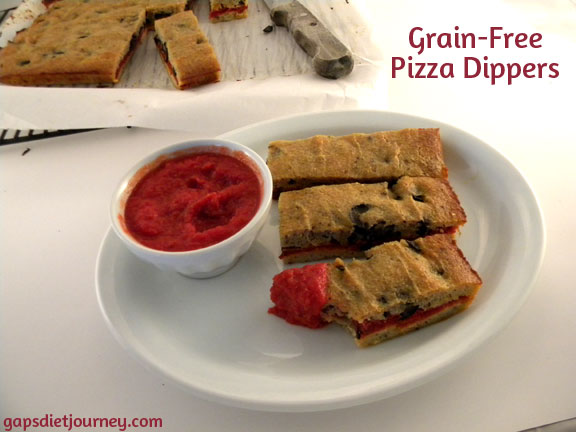
    Grain-Free Pizza Dippers

    Today I have a recipe created especially to replace pizza dippers. Remember that the texture when using coconut flour [affiliate link] is never going to be exactly like what you remember, back when you ate “regular” gluten-filled flour pizza. The texture of these dippers is more cake-like, but still very tasty. What I like the best is you can pick them up and dip them!

    Baker's Dozen Savory Quick Breads
    Are you looking for more savory-type breads? You’re going to love Baker’s Dozen Savory Quick Breads! Click the image to get your own copy!

    These dippers are very nutrient dense, so you will probably find this dish will feed quite a few people. We sliced ours into 16 pieces and my husband and I were stuffed after eating four pieces each. We have had them with the pepperoni and cheese, and without and they are very good prepared either way.

    Please be sure that you have Parchment Baking Paper or are using a silicone dish because these do tend to stick.

    Grain-Free Pizza Dippers

    SAUCE (Used in the middle of the dippers and as a dipping sauce)

    • 12 ounces tomato paste
    • 1/2 cup water
    • 1-1/2 teaspoon oregano
    • 1/2 teaspoon basil
    • 1 teaspoon onion powder
    • 1 teaspoon garlic powder [affiliate link]
    • 1/2 teaspoon sea salt [affiliate link]
    1. Mix all ingredients together, bring to a boil and lower heat.
    2. Simmer for five minutes, then remove from heat.

    Sauce for the Pizza Dippers
    Author: 
     
    This sauce is used in the middle of the dippers and as a dipping sauce.
    Ingredients
    • 12 ounces tomato paste
    • 1 cup water
    • 1-1/2 teaspoon oregano
    • ½ teaspoon basil
    • 1 teaspoon onion powder
    • 1 teaspoon garlic powder
    • ½ teaspoon sea salt
    Instructions
    1. Mix all ingredients together, bring to a boil and lower heat. Simmer for five minutes, then remove from heat.

    THE DIPPER DOUGH

    • 9 eggs [affiliate link] (449 grams)
    • 1/2 cup coconut oil [affiliate link]
    • 2 tablespoons honey [affiliate link]
    • 1/2 cup coconut flour, packed (98 grams)
    • 3/4 teaspoon salt
    • 1 teaspoon oregano
    • 1/4 teaspoon basil
    • 1/8 teaspoon rosemary
    • 1/8 teaspoon ground thyme
    • 1/2 teaspoon onion powder
    • 1/4 teaspoon garlic powder
    • 1/4 teaspoon baking soda [affiliate link]
    • 1 tablespoon apple cider vinegar

    FILLINGS

    1. Preheat oven to 325°F.
    2. Lightly butter a casserole dish measuring 9″ x 12″ and line with parchment paper.
    3. In mixing bowl, add all ingredients. Blend with a hand mixer until thoroughly mixed.
    4. Remove half of the batter and smooth into the bottom of the casserole dish.
    5. Layer pepperoni across the batter.
    6. Spread on tomato paste mixture.
    7. Layer black olives and all other toppings you wish to add. Slightly press on the toppings so they are smooth.
    8. Sprinkle cheese on top.
    9. Smooth the remainder of the batter on top of the toppings.
    10. Bake for 30 minutes.
    11. Remove and slice.
    12. Serve the dippers with the remaining sauce.

    Stuffed Cheesy Pepperoni Pizza Dippers (Grain-Free Coconut Flour)
    Author: 
    Cook time: 
    Total time: 
    Serves: 16
     
    These ingredients make up the dippers and the filling used in the middle of the dippers. The recipe at the blog has the recipe for the filling/sipping sauce, plus links to cheeses that are legal for the GAPS Diet, as well as a recipe for making your own GAPS legal pepperoni.
    Ingredients
    • THE DIPPER DOUGH
    • 9 eggs (449 grams)
    • ½ cup coconut oil
    • 2 tablespoons honey
    • ½ cup coconut flour, packed (98 grams)
    • ¾ teaspoon salt
    • 1 teaspoon oregano
    • ¼ teaspoon basil
    • ⅛ teaspoon rosemary
    • ⅛ teaspoon ground thyme
    • ½ teaspoon onion powder
    • ¼ teaspoon garlic powder
    • ¼ teaspoon baking soda
    • 1 tablespoon apple cider vinegar
    • FILLINGS
    • ½ of the sauce recipe (see the original post for the recipe)
    • 16 black olives, sliced, optional
    • 4 ounces pepperoni, optional (if you are on the GAPS Diet be sure to use GAPS legal pepperoni)
    • 8 ounces shredded cheddar cheese, optional (If you are on the GAPS Diet, be sure to use GAPS legal cheese)
    Instructions
    1. Preheat oven to 325°F.
    2. Lightly butter a casserole dish measuring 9″ x 12″ and line with parchment paper.
    3. In mixing bowl, add all ingredients. Blend with a hand mixer until thoroughly mixed.
    4. Remove half of the batter and smooth into the bottom of the casserole dish.
    5. Layer pepperoni across the batter.
    6. Spread on half of the tomato paste mixture.
    7. Layer black olives and all other toppings you wish to add.
    8. Slightly press on the toppings so they are smooth.
    9. Sprinkle cheese on top.
    10. Smooth the remainder of the batter on top of the toppings.
    11. Bake for 30 minutes.
    12. Remove and slice. Serve with remaining sauce.
    Nutrition Information
    Serving size: 2

    I would love to hear in the comments what you think about these pizza dippers, do you think you will try them? 


    GAPS DIET JOURNEY is a participant in the Amazon Services LLC Associates Program, an affiliate advertising program designed to provide a means for sites to earn advertising fees by advertising and linking to AMAZON.COM. GAPS DIET JOURNEY is an affiliate for several companies and may be compensated through advertising and marketing channels. Therefore, this post may contain affiliate links.

  • Which Should I Do First? Introduction or Full GAPS

    Which Should I Do First? Introduction or Full GAPS

    Full GAPS or Intro?

    This is a question asked by many when they consider embarking on the GAPS Diet. I believe that for most of us it is going to be a huge adjustment to begin with full GAPS.

    If you are eating a “SAD” (Standard American Diet) or even a “traditional foods” diet, this is going to mean a significant change in what you eat.

    These diets include a lot of grains (“whole” and “soaked” if you’re eating traditional): wheat, corn, rice, etc. and this can make up the bulk of what you eat on a regular basis. I loved these high carbohydrate foods with a passion. My husband loved to cook them for our family and it was a huge adjustment for not only me, but for him as the main cook to have to stop making homemade baked macaroni and cheese, rice, homemade noodles, homemade bread, etc.

    Beginning full GAPS means you will be removing most commercially prepared foods which will allow you to easily avoid “illegal” items like food coloring, artificial flavoring, sugar and all its form, corn which is in almost everything, etc.

    Tip: It’s easier to focus on what you CAN eat, rather than what you cannot.

    I felt like full GAPS was a huge learning curve and I was familiar with cooking from scratch and making broth. It can be very difficult for people who are accustomed to eating on the go who don’t cook much. When I was active on the Yahoo GAPS Group I would suggest to newcomers that they start with full GAPS but I always felt a little bit uncomfortable doing that since on Dr. Natasha’s site she makes this plea:

    However, please do not be tempted to skip the Introduction Diet and go straight into the Full GAPS Diet, because the Introduction Diet will give your patient the best chance to optimize the healing process in the gut and the rest of the body. I see cases where skipping the Introduction Diet leads to long-term lingering problems, difficult to deal with.

    So even though doing full GAPS first and then Introduction after four months had worked for me, I thought I had better submit a question and make sure it was okay! Here from Dr. Natasha’s FAQ page:

    Question: I know you say we should not skip introduction, but can you clarify for us if it is OK to do the Full GAPS Diet first and then do Intro after a few weeks of transitioning the body to lower carbohydrates, lower fiber, higher fats and the addition of probiotics?

    Dr. Natasha’s answer: Absolutely! Some people start from the Full GAPS Diet, and then later on, if there is a need, they do the Introduction Diet. Some people, particularly those without severe digestive symptoms, never do the Introduction Diet; they get well with the Full GAPS Diet alone. It is very individual. Generally, the Introduction Diet should be followed if there is diarrhea, other serious digestive problems and food intolerances. Children and adults with severe learning disabilities do well on the Introduction Diet. But if we have an adult without much digestive trouble, and who finds it difficult to change their diet at all, they often start from the Full GAPS Diet. An adult with chronic persistent constipation usually does well starting from the Full GAPS Diet; later on many of them find it very useful to do the Introduction Diet, when they are mentally ready for it.

    Whew, I was really glad for her confirmation that there are specific situations where one should start with Introduction first, but for the rest of us we can begin with full GAPS.

    If you’ve been on full GAPS for awhile and looking for help with the Introduction Diet, my friend and affiliate partner Cara from Health, Home and Happiness has a very helpful guide which will take you through 30 days of Introduction. You can click here to read my review or click here to buy it: What Can I Eat Now? 30 Days on GAPS Intro

    Have you started GAPS? Did you begin with Introduction or Full GAPS?


    GAPS DIET JOURNEY is a participant in the Amazon Services LLC Associates Program, an affiliate advertising program designed to provide a means for sites to earn advertising fees by advertising and linking to AMAZON.COM. GAPS DIET JOURNEY is an affiliate for several companies and may be compensated through advertising and marketing channels. Therefore, this post may contain affiliate links.

  • Cherry Limeade Electrolyte Drink (GAPS Friendly)

    Cherry Limeade Electrolyte Drink (GAPS Friendly)

    Refreshing Cherry Limeade

    Sometimes you need to replenish your electrolytes, and whether you’re on a special diet like GAPS or just want to avoid the commercially prepared store version, it’s good to have a few recipes ready in case you need them. Then you can just whip one up with a few simple ingredients.

    I don’t think I’ve ever ingested a commercially produced electrolyte because I’ve always known how easy it was to make at home. And if you need more persuading, take a look at the ingredient label. You’ll find artificial coloring, artificial flavoring, artificial sweetener, maybe high fructose corn syrup for the knock off brands and to add insult to injury these drinks are usually  expensive.

    Recently my son got a mild case of stomach flu and I was concerned he wasn’t drinking enough. He prefers to drink water, but I know that people tend to drink more when there’s sweet involved so I decided to try making an electrolyte drink that would be ideal for using on GAPS.

    Consider making a batch to have on hand if you are planning to be out in the heat, working up a sweat at the gym or if you’ve had a stomach bug as it will help you to replenish lost minerals. I think this would also be a big hit to bring for a picnic on a warm day.

    The cherries are going to add a bit of natural flavoring so add honey [affiliate link] to taste. Some folks on GAPS that want to stay low on carbohydrates use Stevia and if that’s you (even though it’s not legal, it’s a small cheat in my opinion) omit the honey and use Stevia to taste instead.

    It would be very easy to change up this recipe. If you don’t have limes, what about lemons? In a pinch you could even use apple cider vinegar for the tang. Add some cinnamon [affiliate link] and you’ll have a flavor reminiscent of apple pie. Swap out the cherries with any other berry you have available. Blueberries, blackberries, or possibly a stone fruit, like peaches. The possibilities are endless – just put on your thinking cap!

    Refreshing Cherry-Limeade

    • 12 cherries
    • 4 tablespoons lime juice
    • 4 cups water
    • 1 Tablespoon honey or more to taste
    • 1/4 to 1/2 teaspoon sea salt [affiliate link]
    • 1/2 teaspoon Trace Mineral Liquid from Concentrace
    1. Puree the cherries (ideally in a high-powered blender) with 1 cup of water.
    2. Add remaining water, lime juice, honey, sea salt and Trace Mineral Liquid.
    3. Serve over ice.

    Cherry Limeade Electrolyte Drink (GAPS Friendly)
    Author: 
    Recipe type: Electrolyte Substitute Drink
     
    This is an electrolyte drink you can make at home so save money and is also acceptable for the Gut and Psychology Syndrome Diet.
    Ingredients
    • 12 cherries
    • 4 tablespoons lime juice
    • 4 cups water
    • 1 Tablespoon honey or more to taste
    • ¼ to ½ teaspoon sea salt
    • ½ teaspoon Trace Mineral Liquid from Concentrace
    Instructions
    1. Puree the cherries (ideally in a high-powered blender) with 1 cup of water.
    2. Add remaining water, lime juice, honey, sea salt and Trace Mineral Liquid.
    3. Serve over ice.


    GAPS DIET JOURNEY is a participant in the Amazon Services LLC Associates Program, an affiliate advertising program designed to provide a means for sites to earn advertising fees by advertising and linking to AMAZON.COM. GAPS DIET JOURNEY is an affiliate for several companies and may be compensated through advertising and marketing channels. Therefore, this post may contain affiliate links.

  • Watermelon Sherbet (Dairy-Free & Sugar-Free)

    Watermelon Sherbet (Dairy-Free & Sugar-Free)

    Watermelon SherbetOne of my favorite things about summer is watermelon. I know that watermelon is available year round nowadays, but the best watermelons are the ones purchased at the height of the season and for Arizona that is right around the 4th of July.

    I have grown to be an expert at picking watermelons. There are two things I employ to pick a winner. First of all I pat the watermelon with my hand and listen to the sound it makes as well as how the melon vibrates. I don’t really know how to explain the vibration but when the watermelon is juicy and crisp, the way I love it, there’s a bit of vibration to the watermelon when I pat it.

    Secondly, although not absolutely necessary is the presence of “sugar spots”. These are hard, black, shiny beads found on the rind of the watermelon where there has previously been a small crack. The black beads are sugar, and this indicates a deliciously sweet melon.

    My favorite way to eat watermelon is icy cold straight from the fridge, especially if it is a perfect melon. But every so often the melon I choose is not totally perfect, and by that I mean it may have some mushiness. The flavor is still there, but I am not super impressed with the texture. This is when I take the opportunity to make watermelon sherbet. This recipe has no added sweetener, is dairy-free and very delicious!

    Watermelon Sherbet

    2 cups (16 ounces) watermelon

    1 teaspoon gelatin [affiliate link]

    1/4 cup water

    1/2 cup coconut milk [affiliate link]

    1 teaspoon vanilla [affiliate link] extract

    1. If you have an ice cream maker that holds a frozen insert be sure to place in the freezer at least 24 prior to making this sherbet. Alternatively you can also put an 8″ x 8″ pan in the freezer about an hour before you make this sherbet.
    2. Place gelatin in water and stir until dissolved.
    3. Place watermelon, coconut milk and vanilla extract into blender and whir until liquefied.
    4. While mixture is whirring, add the dissolved gelatin.
    5. Place in an ice cream maker and mix until thick. If you’re using the pan in the freezer, stir every 20 minutes until frozen to your satisfaction.

    This is my favorite ice cream maker: Cuisinart ICE-21 1.5 Quart Frozen Yogurt-Ice Cream Maker (White)


    Watermelon Sherbet (Dairy-Free & Sugar-Free)
    Author: 
     
    Ingredients
    • 2 cups (16 ounces) watermelon
    • 1 teaspoon gelatin
    • ¼ cup water
    • ½ cup coconut milk
    • 1 teaspoon vanilla extract
    Instructions
    1. If you have an ice cream maker that holds a frozen insert be sure to place in the freezer at least 24 prior to making this sherbet. Alternatively you can also put an 8″ x 8″ pan in the freezer about an hour before you make this sherbet.
    2. Place gelatin in water and stir until dissolved.
    3. Place watermelon, coconut milk and vanilla extract into blender and whir until liquefied.
    4. While mixture is whirring, add the dissolved gelatin.
    5. Place in an ice cream maker and mix until thick. If you’re using the pan in the freezer, stir every 20 minutes until frozen to your satisfaction.

     
    GAPS DIET JOURNEY is a participant in the Amazon Services LLC Associates Program, an affiliate advertising program designed to provide a means for sites to earn advertising fees by advertising and linking to AMAZON.COM. GAPS DIET JOURNEY is an affiliate for several companies and may be compensated through advertising and marketing channels. Therefore, this post may contain affiliate links.

  • What Kinds of Cheese Can I Eat on the GAPS Diet?

    cheddar cheese

    I have always loved cheese. Milk, not so much. I know cheese is made from milk but I have never liked the taste of milk.

    During my pregnancy with my second son I discovered that my body actually didn’t tolerate dairy very well. My doula recommended that I remove all dairy products from my diet 30 days prior to my due date. She explained that infants – whose mothers did not consume dairy products during this time – were much less likely to require suctioning after being born so I decided to take her recommendation.

    After my son was born, of course I resumed eating cheese and dairy products. That was when I discovered that dairy produces a thick phlegm in my throat. After eating dairy on a regular basis I no longer notice the sensation but due to this experience, I had a pretty good idea that dairy was a problem for me.

    That is why when I embarked on the GAPS diet, I decided to remove all dairy products (even butter). I hoped removing dairy products would help me get off of the two asthma medications I’d been on for several years. After a while, I added butter back in but I stayed off of dairy products for several years.

    At close to the one year mark on GAPS I was able to completely taper off asthma medication and now go for months at a time without having to use even my inhaler. Two or three times since 2010 I have caught a cold that kicks up my asthma but other than that I have no problems breathing. I do find I am able to tolerate a limited amount of dairy products but know it’s time to back off because I begin to have uncomfortably congested sinuses.

    For those with digestive woes due to lactose intolerance it’s pretty easy to determine if you have a sensitivity to dairy products but even if you don’t think you have a problem you may want to avoid them for a month just to see how your body responds.

    For those of you who already know that you and dairy get along just fine, there are several cheeses that are allowed on the GAPS diet. I’ll get to those in a minute.

    When on GAPS, Dr. Natasha states we should remove any unfermented dairy products from our diet. That means you’ll be avoiding fresh cheeses (cream cheese, mozzarella, feta, ricotta), milk and fresh cream.

    Lactose, a disaccharide, is the main reason we must avoid certain dairy products while on the GAPS Diet. Regular milk as you probably know, definitely contains lactose so it definitely must be removed from the diet.

    Dairy is allowed and tolerated by many after fermentation. Specific bacteria “eat” the lactose and make dairy tolerable to most.

    Avoid These Cheeses

    • All processed cheeses (sliced American, etc.)
    • Cottage cheese
    • Cream cheese (also Neufchatel)
    • Feta Cheese
    • Gjetost cheese
    • Mozzarella cheese
    • Ricotta cheese
    • Tofutti cheese

    Eat These Cheeses

    Yogurt (fermented for 24-hours to remove as much lactose as possible), kefir and fermented cheeses are allowed.

    • Asiago
    • Blue
    • Brick
    • Brie
    • Camembert
    • Cheddar
    • Colby
    • Edam
    • Gorgonzola
    • Gouda
    • Havarti
    • Limburger
    • Monterey Jack
    • Muenster
    • Parmesan
    • Port du Salut
    • Roquefort
    • Romano
    • Stilton
    • Swiss
    • Uncreamed cottage cheese (dry curd)

    If you’ve been sensitive to cheese or dairy in the past you may want to introduce them into your diet slowly just to reduce the chance of discomfort from negative side effects.

    I’d love to hear your thoughts about cheese and dairy in the comments. What is your favorite cheese? 


    GAPS DIET JOURNEY is a participant in the Amazon Services LLC Associates Program, an affiliate advertising program designed to provide a means for sites to earn advertising fees by advertising and linking to AMAZON.COM. GAPS DIET JOURNEY is an affiliate for several companies and may be compensated through advertising and marketing channels. Therefore, this post may contain affiliate links.