GAPS Diet Journey Logo

Blog

  • Is Sleep Important When You’re on a Healing Journey?

    Is Sleep Important When You’re on a Healing Journey?

    The Importance of Sleep when You're on a Healing Journey

    Most definitely. Since the body does a lot of important work while you sleep, it’s vitally important to get enough sleep when you’re on a healing journey.

    I became interested in sleep at the young age of 16. Up to that point in my life, I’d lived with my family of origin and we slept fairly normally, as far as I could tell. We had a regular schedule for the weekdays and typically slept in on the weekends.

    But then my life changed dramatically… basically my mother gave me away but for brevity let’s just say I was placed with a foster family.

    The foster mother had the strong belief that sleep was a major waste of time. I can’t tell you how many times I heard “You’re sleeping a third of your life away!

    Up to that point in my life, I’d not thought much about sleep but it quickly became a source of contention. She regularly waxed nostalgic with stories of how in her teen years she went to school, then worked part-time after school, came home and cared for her bedridden parents, cooked dinner, cleaned the house and finally started on her homework around midnight. She believed that four hours of sleep was more than enough.

    But I digress… is sleep important when you’re on a healing journey?

    Most definitely.

    Giving Your Body the Chance to Recover

    Have you ever heard of the term “convalesce”? Here’s the meaning from Merriam-Webster:

    convalesce: to recover health and strength gradually after sickness or weakness 

    Decades ago people actually gave their bodies the chance to get better. They literally went to bed for days or weeks at a time and sometimes they weren’t even sick! It was simply accepted that sleep and rest were vital requirements for recovery and good health.

    What do we typically do in this day and age? Well, I know I’ve met my fair share of people who pride themselves on getting by on 5, 6 or even fewer hours of sleep each night. If they get sick, they pop a pill or drink some over-the-counter medication which masks symptoms and they keep going.

    As a young person, I discovered that over-the-counter medications rarely worked for me. I often felt worse rather than feeling better. As a result, I avoided them, choosing to use more natural means of assisting my body in healing and sleep has always played a huge part.

    Bedridden for One Month

    One time I decided I had to keep going, and it resulted in my becoming sicker than I’d ever been in my entire life.

    We were moving to a rural area, and it wasn’t really an option (or so I thought) to stop everything and stay in bed and get better. I decided to take a cold and flu suppressant which suppressed my symptoms and allowed me to push myself past the point of exhaustion.

    The end result was a very bad case of bronchitis (I’d never had a lung infection in my life) which progressed into pneumonia. I ended up having to stay home from work and was literally bedridden for an entire month.

    We had managed to move one truckload of things to our new home and ended up staying at the old place three long weeks, mostly because I was so sick that I was terrified of being too far from an Urgent Care or hospital. This from someone who avoids doctors like the plague!

    After I was finally able to stay in an upright position for more than a few minutes at a time, it took months for me fully recover my former energy levels. I continued having a hard time breathing and was eventually diagnosed with asthma and put on prescription medications for almost 10 years (I was able to get off these medications within a year of starting on GAPS).

    Suffice it to say that I became even more convinced that getting sufficient rest and sleep plays a huge part in maintaining health.

    What Happens When We Sleep?

    The body goes through several phases while sleeping and is extremely busy in spite of sleep being considered “a waste of time”. Muscles are repaired, skin goes through intense repair and regeneration, memories are consolidated,  hormones are released which manage insulin sensitivity, glucose tolerance, levels of ghrelin and leptin (all which affect hunger and appetite, and in turn our ability to maintain or lose weight). Recent studies are showing that our immune system fights disease while we sleep and sleep deprivation inhibits that fight.

    That’s just a few things that our body does when we sleep.

    How to Get Better Sleep?

    If you are on a healing journey, or even just trying to stay in good health… let’s say everyone at work is sick. Now’s the time to get more and better sleep. Here are some of the things I do and recommend that you try.

    Try to Stay on the Same Schedule

    Establish a routine of going to bed and getting up and try to stick to it. I would suggest creating a bedtime routine that may last 1 to 2 hours and then allow yourself 9 hours to sleep, with the goal of sleeping a good solid 8 hours.

    As an example, if you have to be at work at 9 am and it takes 15 minutes to get to work and an hour to get ready, that means you need to get up 1 hour and 15 minutes before due at work, so 7:45 at the very latest. It is probably a good idea to give yourself half an hour to get to work, so that would mean waking up by 7:30. Plan to start your 1-hour bedtime routine by 9:30 pm and get into bed by 10:30 pm.

    7:30 Wakeup, eat breakfast, make lunch and get ready for work

    8:30 Leave for Work

    9:30 pm Begin bedtime routine

    10:30 pm Get into bed

    11:00 Lights out

    I know it’s sometimes difficult, but nothing will screw up your sleeping routine faster than staying out way past your bedtime. This becomes even more important if you are on a journey to better health. Try not to let anything or anyone get in the way of your regular bedtime.

    Your bedtime routine might look something like this:

    9:30 Turn on healing music. Brush and floss teeth.

    9:35 Pick out clothes you’ll wear to bed and tomorrow. Start water in the tub.

    9:40 Turn on the salt lamp in the bedroom and turn down the covers.

    9:42 Put Epsom salts into tub, undress and get in. Light candles, if desired. Continue listening to healing music.

    10:00 Get out of tub, dress. Make sure doors are locked and windows are closed (or open if you live in an area where it’s safe and you want to let cool air in the house while you sleep)

    10:05 Sit at the table and work on your latest Zentangle Art creation, or snuggle up in your favorite chair and read a real book.

    10:30 Get into bed. Continue reading or spend time with your sweetie.

    11:00 Lights out.

    Reduce Lighting in Preparation for Sleep

    Have you ever noticed when camping you start feeling sleepy much sooner than your normal bedtime? Especially when you are in a quiet dark forest with a campfire. The darkness tells your body it’s time to go to sleep.

    Start your evening bedtime routine by lowering the lights in your bedroom. I love using my salt lamp, it reminds me of campfire light and really helps me to start feeling sleepy.

    Limit “Screen” Time or use a Blue Light Filter

    I dearly love to watch television in bed, sometimes Netflix on my Kindle Fire or phone. But it’s really not a good practice. If you must, use a blue light filter on your device to reduce the effect. Reading – a real book – is ideal for a bedtime routine.

    Sleep in the Dark

    It is important that we sleep in complete darkness as much as possible. You may want to use heavy curtains to block the light.

    If you have any devices plugged in that light the room, unplug or cover the light. I find that the blue power button lights are especially disrupting and seem to light up the whole room.

    If you are a woman of childbearing age, some sources sleeping by the light of the moon to improve fertility.


    Use a Sleep Tracking App

    I use a sleep tracking app called Sleepbot. It helps me to know where I’m at sleep-wise. I feel a lot better when I’m getting enough sleep but knowing my sleep debt helps me to know that I might be a little more sensitive about things than normal and to be extra nice to myself. I can also make a point to take a nap, or sleep in a little on the weekends.

    Listen to a Bedtime Story

    Sometimes I just can’t get my brain to stop worrying and bringing up every little thing that’s upset me throughout the day. When I can’t fall asleep within a reasonable amount of time I enlist the help of Scooter to banish the “brain bots”. Scooter is a great help when it comes to calming my brain. Check him out sometime when you can’t sleep: Sleep With Me Podcast.

    Listen to Healing Music

    I have very recently started to listen to healing music. I purchased the CD which comes with a free MP3 version from Steve Halpern. I started out by listening in my car on the way to work because my job is very often so stressful. I feel like it is helping me to feel more relaxed.

    My question for you: What do you think about sleep?

    References:

    Energy Budget e-course – Get it Done Even with Low Energy

    Rachel Ramey is the creator of Energy Budget e-course and blogger at Titus 2 Homemaker.

    Rachel created the Energy Budget because she suffers from chronic illness. She had a plan for keeping her home running fairly smoothly but as her condition worsened, so did the condition of her home. So she had to find a new plan.

    Maybe you don’t have a chronic illness. Although this course was written with the chronically ill in mind, there are others in similar situations who may find some of these strategies useful. Hard pregnancies, recovery from injury, lengthy-but-not-chronic illnesses such as mononucleosis, parenting chronically ill kids, etc. – these are all situations where the standard methods don’t always work.

    Click here to learn more about the Energy Budget e-course

    GAPS DIET JOURNEY is a participant in the Amazon Services LLC Associates Program, an affiliate advertising program designed to provide a means for sites to earn advertising fees by advertising and linking to AMAZON.COM. GAPS DIET JOURNEY is an affiliate for several companies and may be compensated through advertising and marketing channels. Therefore, this post may contain affiliate links.

  • Review: 30 Keto Meals in 30 Minutes + Adorable Mini Zucchini Avocado Burger Recipe

    Review: 30 Keto Meals in 30 Minutes + Adorable Mini Zucchini Avocado Burger Recipe

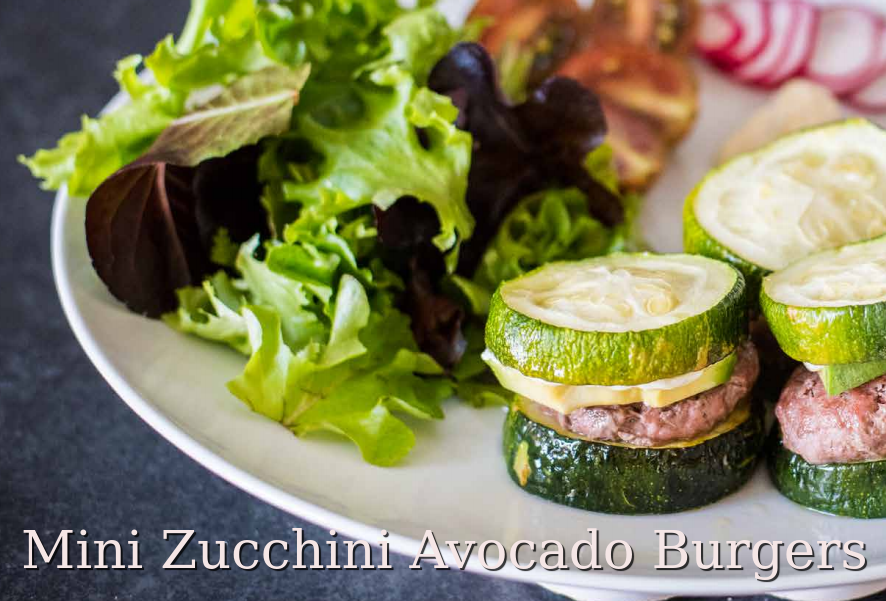
    Mini Zucchini Avocado Burgers

    In a recent post I wrote how I was using intermittent fasting and drinking broth to lose weight. I also touched on another component that I found has been very important for me… apparently in order to lose weight I need to stay very low on my carbohydrates.

    Very low carb = Ketogenic Diet. While taking a closer look at this protocol via the site called Rule.me I discovered that not only was I getting too many carbohydrates but I was eating too much food. This is mostly due to the fact that my job requires a lot of concentrated sitting in front of a computer so my caloric needs aren’t as high as they might be if I were working a job that was more physical.

    Here’s the good news: It is definitely possible to do the Ketogenic Diet in combination with GAPS.

    I am pleased to report that I have lost 24 pounds since May!

    If you are interested in combining GAPS with Keto it’s pretty simple. Stick with the full GAPS list of foods. You’ll want to pay attention to the vegetables as they are your carbohydrates. Then start tracking your calories and carbohydrates. I like to use MyFitnessPal, an app that I can use on my desktop computer or any mobile device.

    To start you out, here’s a GAPS-friendly recipe I found inside 30 Keto Meals in 30 Minutes.  Louise Hendon is the author and she has given me permission to share this recipe.

    30 Keto Meals In 30 Minutes

    4.5 rating
    30 Keto Meals in 30 Minutes (GAPS Friendly Rating 4.5 stars)

    I have looked through Louise’s e-book and found it to be quite GAPS-friendly plus mostly dairy-free and ideal for the Paleo Diet. The few issues I found:

    • It mentions using the microwave in a few recipes
    • It calls for Stevia in the Desserts section (this is only four recipes)
    • Some recipes include tamari sauce, I would recommend substituting coconut aminos
    • The only dairy I found was ghee

    The recipe I am going to share is Mini Zucchini Avocado Burgers and they are just adorable and look so tasty and you can have dinner on the table is less than 30 minutes!

    Due to the “mini” feature, I’m betting the kiddos will also enjoy these!

    Mini Zucchini Avocado Burgers

    Serves 2

    Prep Time: 10 minutes
    Cook Time: 15 minutes
    Total Time: 25 minutes

    • 1 large zucchini, chopped into 1/2-inch (1 cm) thick slices (around 14-16 slices)
    • 1/2 lb (225 g) ground beef
    • 1/4 avocado, cut into small slices
    • 2 Tablespoons (30 ml) olive oil or avocado oil for greasing baking tray
    • 1 teaspoon (5 g) salt
    • 1 Tablespoon (15 ml) coconut mayo (optional)
    • 1 Tablespoon (15 ml) mustard (optional)

    INSTRUCTIONS

    1. Preheat oven to 400 F (200 C).
    2. Grease a baking tray with olive or avocado oil and sprinkle 1 teaspoon of salt across it.
    3. Place the zucchini slices on the baking tray.
    4. Form small balls from the ground beef and press into patties – around 7 or 8 patties – and place on the baking tray.
    5. Place baking tray into oven and bake for 15 minutes. Alternatively, instead of baking them, you can grill the zucchini and beef patties or pan-fry them in some olive or avocado oil.
    6. Put the mini burgers together by placing the burger patty in between 2 zucchini slices and adding the avocado slice, mayo, and mustard to the patty.


    Adorable Mini Zucchini Avocado Burgers
    Author: 
    Recipe type: Keto
    Cuisine: American
    Prep time: 
    Cook time: 
    Total time: 
    Serves: 7
     
    Cute little “mini” burgers. Have dinner for two on the table in under 30 minutes. Keto-Friendly, Dairy-Free, Paleo-Friendly and GAPS-Legal.
    Ingredients
    • 1 large zucchini, chopped into ½-inch (1 cm) thick slices (around 14-16 slices)
    • ½ lb (225 g) ground beef
    • ¼ avocado, cut into small slices
    • 2 Tablespoons (30 ml) olive oil or avocado oil for greasing baking tray
    • 1 teaspoon (5 g) salt
    • 1 Tablespoon (15 ml) coconut mayo (optional)
    • 1 Tablespoon (15 ml) mustard (optional)
    Instructions
    1. Preheat oven to 400 F (200 C).
    2. Grease a baking tray with olive or avocado oil and sprinkle 1 teaspoon of salt across it.
    3. Place the zucchini slices on the baking tray.
    4. Form small balls from the ground beef and press into patties – around 7 or 8 patties – and place on the baking tray.
    5. Place baking tray into oven and bake for 15 minutes. Alternatively, instead of baking them, you can grill the zucchini and beef patties or pan-fry them in some olive or avocado oil.
    6. Put the mini burgers together by placing the burger patty in between 2 zucchini slices and adding the avocado slice, mayo, and mustard to the patty.

     
    GAPS DIET JOURNEY is a participant in the Amazon Services LLC Associates Program, an affiliate advertising program designed to provide a means for sites to earn advertising fees by advertising and linking to AMAZON.COM. GAPS DIET JOURNEY is an affiliate for several companies and may be compensated through advertising and marketing channels. Therefore, this post may contain affiliate links.

  • Are Your Shoes Causing Your Lower Back Pain?

    Are Your Shoes Causing Your Lower Back Pain?

    My back was strong all my life and never gave me any problems. I was proud to have such a strong back. I could lift just about anything I set my mind to – within reason, obviously I couldn’t lift a car! I should shove a refrigerator into place bracing my body against it and not give a second thought. When I was 21 years old, I could lift a 70 pound tank of gas onto the back of a forklift. That was pretty impressive for a 5’4″ 125 pound young woman.


    And then one day in 2014 for no good reason my back started to hurt. Real bad.

    And I did what I had always done with pain. Of course I powered through.

    When it comes to back pain, I discovered that was the WRONG tactic. That evening I was in an extreme amount of pain, so much that I was unable to find a comfortable position to sleep. It took another time or two of my back “going out” to learn to NEVER power through with a back that’s “gone out”.

    I first blogged about my back “going out” in conjunction with sharing about my current chiropractor experience which continues to be a very positive experience. Today I want to elaborate a bit more on this whole back pain situation as I’ve had a few more experiences that are helping me to get a more in-depth understanding of what’s going on with me.

    Stress – A Factor in Back Pain

    I have read that stress can be a factor in back pain, and I know from recent personal experience that it is a factor in my own back problems. July was a very stressful month for me. We have our annual dance for clients at my job and I also had decided to go to a line dancing convention at the end of the month. (What was I thinking? Actually take a vacation?!) Between my normal tasks, the preparations for the dance and working overtime trying to make up in advance for missing five days at work I was very stressed out. I was waking up in the middle of the night with anxiety. I started each day feeling panic that the day was already getting away from me.

    My back had been hurting for a few days and it had been getting progressively worse. And then, the morning of the dance I woke up with my back hurting really bad. I was terrified that something internally was in trouble, like my liver or a kidney. I decided to see if my chiropractor could fit me in and thankfully (of course) she was able to put my mind at ease by telling me exactly where those organs are located (duh).

    Anytime my back starts to hurt I can’t help but feeling scared that it might “go out” to the point where I’ll be incapacitated. On this particular day, I worried because there was no one to take my place as the coordinator of the event. My back has gone out to the point where I can’t sit or drive, let alone walk or stand so that had me feeling very concerned.

    Massage Therapy Alleviates Back Pain

    I decided to get a massage before the adjustment and thankfully the massage therapist had an opening.

    I was very surprised afterward to discover that the pain had almost completely disappeared.

    I was a little nervous for the remainder of the day that my back would erupt with full blown pain, and “go out” but it didn’t. I felt extremely grateful that I had been spared, and happy to learn that a massage can relax me enough to prevent worse pain.

    The next week I went on my vacation, and I lined danced and had a great time and my back was pretty good but still a little cranky. I had been worried it might go out while I was gone! I don’t know what I would have done!

    Now when I say my back was cranky, I mean that it was still bothering me. The pain was concentrated mostly around my hips. It felt like cramps and hurt more on the left side than the right. It wasn’t real bad, but there have been times when my back was hurting just a little and the next thing you know, it would go out. So, I’m paranoid now that any little pain could blow up into full blown pain and being basically crippled. I hate feeling paranoid like that, because I worry that I am bringing it on myself, you know?

    The last time my back went out I was taking a shower getting ready for work and I promise you I did nothing out of the ordinary and BAM. My back went out. I knew better than to power through, but usually I can sit and drive. This time, I not only couldn’t sit and drive, I could barely walk. It just so happened that day I was scheduled to drive the van to pick up clients at my job and someone else had to take my place. Later that day my husband drove me in to see my chiropractor (50 miles away) and I had to lay in the back seat because I couldn’t tolerate being in an upright position. I don’t even know how I managed to get into the back seat. That is the last time my back went out – November 30, 2016. Wow, I’ve almost made it an entire year this time! That’s fantastic! I can’t help but wonder if drinking broth almost every day of this year has been a factor?

    Worn Shoes Cause Back Pain

    A couple of weeks ago one of my coworkers asked me if I could look for a pair of sandals that she likes online (she is an older woman and doesn’t shop online) so we were looking at Amazon. We were talking about shoes in general and she mentioned that her shoes were getting worn on the heels and she was sure her back pain was related. I took a look at my sandals and they were worn in the heels, too! Not  too badly though. I bought this pair last year in July.

    Naturalizer Convey Sandal

    So I decided right then and there to stop wearing these shoes.

    It only took a day for my back to start feeling a lot better. Thank goodness. Now this is one of those things that I need to pay attention to in the future. If my back starts hurting across the hips, it could be my shoes.

    In reading Mark Sisson’s Amazing Feets, I came to a deeper understanding of why my back begins to hurt when my shoes wear out. It totally makes sense!

    Here’s a pertinent quote, “Barefoot enthusiasts also report relief from all manner of pain and chronic injuries to the lower extremities, particularly conditions that respond poorly to conventional treatments and even seemingly unrelated conditions such as lower back pain.”

    Amazing Feets by Mark Sisson

    Mark says, “The human foot is a sensitive, capable, highly mobile appendage packed with an intricate network of nerve endings, muscles, tendons, ligaments, 52 bones and fascia that respond and react to the environment in order to help you walk, stand and run gracefully. The alignment and function of your knees, pelvis, spine, and upper body are all heavily reliant on the effect balance, stability, impact absorption, weight transfer, and propulsion provided by your feet.”

    If the shoes I’m wearing have worn out, my alignment is going to automatically be thrown off balance. This makes so much sense!

    Do you need to stop wearing your current pair of shoes?


    GAPS DIET JOURNEY is a participant in the Amazon Services LLC Associates Program, an affiliate advertising program designed to provide a means for sites to earn advertising fees by advertising and linking to AMAZON.COM. GAPS DIET JOURNEY is an affiliate for several companies and may be compensated through advertising and marketing channels. Therefore, this post may contain affiliate links.

  • How to Make An Omelette in a Stainless Steel Skillet (Without Using Non-Stick Spray)

    How to Make An Omelette in a Stainless Steel Skillet (Without Using Non-Stick Spray)

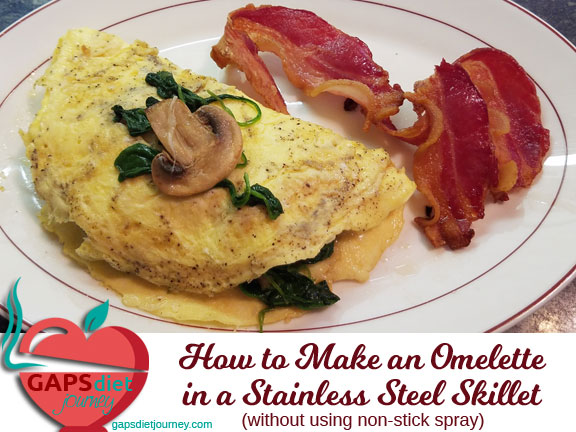
    Spinach, Cheese and Mushroom Omelette

    When I was growing up my mother had a full set of cast-iron skillets, but those were so old-fashioned. Of course when I got into my own place I got a nice set of modern skillets.

    Non-stick skillets.

    I had no idea how poisonous they were but when I finally got wise to the dangers I switched right to cast-iron. I was glad that I was familiar with using them. For several decades I used mostly cast-iron skillets.

    A few years ago I learned that my iron levels were higher than they should be. Maybe even dangerously high, so I retired the cast-iron and moved on to stainless steel. I’ve been working with them for several years now and I’ve just accepted the fact that food sticks.

    Often. And I don’t use non-stick spray, so that’s not an option.

    I’ve managed to get by with food sticking, deglazing as I go but one thing I’ve missed is being able to make omelettes. Even making scrambled eggs [affiliate link] is a pain since the eggs stick so hard to the pan that it has to be soaked for hours.

    Nowadays I rarely have breakfast, but every once in awhile I get a craving for an omelette, and that craving came a few mornings ago after viewing someone’s delicious looking omelette on Instagram.

    This Spinach and Avocado Omelette is one of my favorites.

    I thought surely there had to be a way to make an omelette using a stainless steel skillet without using non-stick spray. So of course I hit the Internet to see what I could find. And wonder of wonders, I learned there’s a better way to cook with stainless steel!

    Basically it has to do with preheating the skillet, which totally makes sense. Preheating the skillet, along with using some kind of fat like butter or bacon grease creates a non-stick surface so that the food can’t stick. I am so glad to know this!

    Today I tested out sauteing chuck roast in my Instant Pot (because it always sticks when I’m just trying to brown the sides of the meat) and that worked so much better! Usually I’m trying to pry the roast off the bottom of the Instant Pot insert and it keeps spinning around and around.

    Here’s my new method for making omelettes.

    Spinach, Cheese and Mushroom Omelette

    • 1 tablespoon unsalted butter
    • 2 eggs, lightly scrambled
    • 1 handful of spinach, sauteed in water until wilted
    • 2 mushrooms, sauteed in a small amount of butter until tender
    • 1 ounce Parmesan cheese
    • Salsa, if desired
    • small amount of water in a glass nearby
    1. This works best with a 10″ skillet.
    2. Have all the ingredients ready before heating the skillet.
    3. Preheat your stainless steel skillet on medium heat.
    4. Every 15 seconds or so dip your fingers into the water and flick drops of water at the skillet. You’ll know it’s hot enough when the drops bounce around on the skillet
    5. Reduce the heat just slightly (medium on my stove is 5, so I reduce the heat to 4), drop the butter in and stir around the whole surface of the skillet.
    6. The butter will be bubbling quickly and may even caramelize slightly.
    7. Quickly pour in the eggs and tilt the skillet from one side to the other so that the eggs cover the entire surface.
    8. Take a spatula and carefully lift one side of the eggs which are already cooked to allow raw eggs to run underneath.
    9. Repeat lifting all sides of the omelette, allowing raw egg to run underneath.
    10. Allow the eggs to cook for 30-60 seconds and then you’ll want to carefully flip the omelette.
    11. Place cheese on top.
    12. Put a lid on top for about one minute.
    13. Add mushrooms and the spinach, flip over and remove to a plate.
    14. Serve with salsa on top, if desired.

    As I mentioned above, this technique is working out great for other foods as well! I just make sure the stainless steel cooking utensil is hot enough for water to bounce around on it, add some grease and the sticking has been greatly reduced!

    How to Make An Omelette in a Stainless Steel Skillet (Without Using Non-Stick Spray)
    Author: 
    Serves: 1
     
    Ingredients
    • 1 tablespoon unsalted butter
    • 2 eggs, lightly scrambled
    • 1 handful of spinach, sauteed in water until wilted
    • 2 mushrooms, sauteed in a small amount of butter until tender
    • 1 ounce Parmesan cheese
    • Salsa, if desired
    • small amount of water in a glass nearby
    Instructions
    1. This works best with a 10″ skillet.
    2. Have all the ingredients ready before heating the skillet.
    3. Preheat your stainless steel skillet on medium heat.
    4. Every 15 seconds or so dip your fingers into the water and flick drops of water at the skillet. You’ll know it’s hot enough when the drops bounce around on the skillet
    5. Reduce the heat just slightly (medium on my stove is 5, so I reduce the heat to 4), drop the butter in and stir around the whole surface of the skillet.
    6. The butter will be bubbling quickly and may even caramelize slightly.
    7. Quickly pour in the eggs and tilt the skillet from one side to the other so that the eggs cover the entire surface.
    8. Take a spatula and carefully lift one side of the eggs which are already cooked to allow raw eggs to run underneath.
    9. Repeat lifting all sides of the omelette, allowing raw egg to run underneath.
    10. Allow the eggs to cook for 30-60 seconds and then you’ll want to carefully flip the omelette.
    11. Place cheese on top.
    12. Put a lid on top for about one minute.
    13. Add mushrooms and the spinach, flip over and remove to a plate.
    14. Serve with salsa on top, if desired.

    Try this when you get a chance and let me know what you think in the comments!


    GAPS DIET JOURNEY is a participant in the Amazon Services LLC Associates Program, an affiliate advertising program designed to provide a means for sites to earn advertising fees by advertising and linking to AMAZON.COM. GAPS DIET JOURNEY is an affiliate for several companies and may be compensated through advertising and marketing channels. Therefore, this post may contain affiliate links.

  • Using Bone Broth and Intermittent Fasting to Lose Weight


    One of my goals for 2017 was to lose 20 pounds. Since transitioning off of GAPS a couple of years ago (I have remained gluten-free) I have gained back thirty pounds. I was up to 202 pounds and was hating my reflection, and not wanting to buy larger clothing.

    Substituting Broth for Meals

    The first thing I did to help facilitate weight loss was to start moving back to eating from the full GAPS list of foods and drinking broth was high on the priority list. I had gotten completely out of the habit and I was so determined to stay on track that I decided to create the 30-Day Broth Challenge!

    I started out by adding just one cup of broth each day. Within two to three weeks, I noticed changes in my body as aches and pains reduced or disappeared. Over the course of this year I have moved from having one cup of broth daily with no change to meals or foods, to replacing breakfast with one cup of broth, eventually skipping breakfast and getting back into intermittent fasting and drinking broth for lunch.

    Bright Line Eating

    I discovered Bright Line Eating and tried the BLE “weight loss” plan for a short period of time. I can relate to much of what Dr. Susan says and I LOVED that her plan assigns food portions and offers a list of predetermined foods and amounts to eat, rather than requiring one to track calories. There are some hard and fast rules, one of them being no sugar of any kind and no flour of any kind (even coconut flour [affiliate link], almond flour [affiliate link], etc.). The meal plan consisted of the following:

    Breakfast

    • 1 protein
    • 1 breakfast grain
    • 1 fruit

    Lunch

    • 1 protein
    • 6 ounces low carbohydrate vegetables
    • 1 fruit
    • 1 fat

    Dinner

    • 1 protein
    • 6 ounces low carbohydrate vegetables
    • 8 ounces lettuce
    • 1 fat

    As an example of servings, 1 protein could be 2 eggs [affiliate link] or 4 ounces of meat or 1 ounce of nut butter.

    After a few days on that plan I felt desperately hungry, to the point I felt like crying, couldn’t stop thinking about food and couldn’t stop complaining. Eventually I decided to track what I was eating in My Fitness Pal and discovered why I was so, so hungry… some days due to my food choices I was getting less than 700 calories. In addition, the fruit/carbohydrates were causing me problems.

    Since I hadn’t yet fully committed to eating full GAPS, I decided to try this combination for breakfast:

    • 1 protein = 1 cup Greek full fat yogurt
    • 1 breakfast grain = 1 ounce steel cut oats soaked overnight in the yogurt
    • 1 fruit = 6 ounces blueberries

    Within two hours I was ravenous. While it felt decadent to have oatmeal again, after trying this combination on three subsequent Saturdays I had to admit that this was just too many carbohydrates.

    I’ve long known that my body doesn’t tolerate carbohydrates well. Two pieces of fruit a day is too much fruit for me. I have to be careful about fruit, it is one of the foods that cause me to start on a binge. It’s easier to just NOT eat fruit, than to try to control the cravings. I have come to the conclusion and am still in the process of accepting that there are just some foods that I can’t (should not) eat, because they set me up with hunger and cravings that are difficult to control (possibly indicating food allergies).

    I am grateful for my experience with Bright Line Eating because it enabled me to ease into tracking my food intake using My Fitness Pal.

    Ketogenic Diet

    From there I decided to look into the Ketogenic Diet. My friend Renee mentioned that it was working very well for her and she was not feeling hungry even though she was restricting her diet.

    I had definitely felt that my fat intake was too low on the BLE weight loss plan and thought, now that’s something I can get on board with, lots of fat.

    I found this site Ruled.me which offers a 30-Day meal plan (pay what you feel it’s worth from $0 up) and I was sorely disappointed to see that Ketogenic Diet followers recommend restricting calories which means you can’t just gorge yourself on high fat foods all day long. Bummer. This guy recommends that women stay under 1600 calories a day. Double bummer.

    Intermittent Fasting

    Not only was I going to have to track my food, but I had to accept that fact that I was going to have to pay close attention to my carbohydrate intake.

    I was still intermittent fasting and learned from my intermittent fasting mentor Jennifer Dages’ that her weight loss would stall unless she stayed under 30 grams carbohydrates.

    By the way, Jennifer’s challenge begins in September, click here to join in: 10-Day Intermittent Fasting Challenge

    Since I started keeping my carbohydrates low, combined with substituting broth for meals and intermittent fasting, I have lost 19 pounds. I have almost accomplished my goal and I am going to extend that to losing 30 pounds by the end of this year. The weight has been lost over a period of three months. If I could stay in ketosis for more than 3-4 days at a time (I have a hard time staying low on my carbohydrates on the weekends while I’m home), I feel confident I would lose weight more steadily. In the meantime, I’m happy that I seem to have a handle on what works for my body.

    My weekday goals:

    • Stay under 1650 calories
    • Stay under 30 grams carbohydrates
    • Eat around 90 grams protein
    • Skip breakfast or have bullet-proof coffee [affiliate link] using ghee and full fat cream (200-250 calories)
    • Lunch: 1-2 cups bone broth plus 1 tablespoon chicken fat (200 calories)
    • Dinner: Meat and salad or vegetables (This is when I eat the bulk of my calories, 700-1200)

    I have been trying to stick with the same eating plan on the weekend days, but it is hard since I am at home. I have tried eating breakfast on the weekends, but it always end up causing me to feel hungry throughout the day. It seems I just do best if I skip breakfast, have a small lunch with the bulk of my calories for dinner.

    Some things to note:

    • I am losing weight even though I eat really late at night, usually around 10pm and as late as midnight
    • I don’t wake in the middle of the night hungry, I’m sure eating really late plays a part but I think the low carbohydrates also factor in
    • Hunger pangs while staying below 30 grams carbohydrates are really easy to manage
    • Food cravings completely disappear when I stop eating certain foods (for example, potatoes, corn, rice, dairy)
    • It seems like I sleep a lot better when I stay low on my carbohydrates (meaning I fall to sleep easily, stay asleep and more often than not do not have to wake up during the night to urinate)
    • I seem to need to stay under 30 grams of carbohydrates to have steady weight loss
    • It takes about four days of staying under 30-50 grams carbohydrates to see weight loss
    • Even though I can’t stick to my goals on the weekends, my weight stays pretty steady and I might even see a drop in my weight after a high carbohydrate “cheat” day

    Would you like to try the 10-Day Intermittent Fasting Challenge- click on the link below to join; it is free.

    Click here to join the 10-Day Intermittent Fasting Challenge


    GAPS DIET JOURNEY is a participant in the Amazon Services LLC Associates Program, an affiliate advertising program designed to provide a means for sites to earn advertising fees by advertising and linking to AMAZON.COM. GAPS DIET JOURNEY is an affiliate for several companies and may be compensated through advertising and marketing channels. Therefore, this post may contain affiliate links.

  • Chocolate Chips (Sugar-Free, Dairy-Free, Soy-Free) & a GAPS Friendly Option

    Simple Honey-Sweetened Chocolate (and GAPS Chocolate Chips!)
    GAPS Friendly Honey [affiliate link] Sweetened Chocolate Chunks

    Chocolate… most women would rather give up just about anything but chocolate. So first of all, if you’re on the GAPS Diet, yes, we can have chocolate, once digestive symptoms have calmed. Awesome, yes?! Click here for my collection of GAPS Legal chocolate recipes: 20+ Delicious Chocolate Recipes

    When I was recipe testing for my friend Jessica Espinoza’s e-book The Splendid Scoop I tried Our Nourishing Roots’ Simple Honey-Sweetened Chocolate and was very pleased with how they tasted in ice cream. If you need to stick strictly to GAPS with no deviations (most people cheat a tiny bit once in awhile) then this recipe will be your best bet. With regards to how these chips hold up for baking, the author says in the comments, “They melt a little more than regular chocolate chips when I made chocolate chip cookies, perhaps because they aren’t a uniform size? But then when they cooled they hardened up again like normal.”

    Another option, which is something I’ve been meaning to try is using Baker’s unsweetened baking chocolate in place of chocolate chips. Typically cookie batter is pretty sweet so I think we could get by with chopping a few squares of Baker’s into chunks and using in place of chocolate chips. I have tried using these chunks in my favorite chocolate shake and I can’t tell I’m using unsweetened chocolate and I love the chunks! Let me know if you try this in cookies.

    If you want to make honey-sweetened chocolate chips to use in trail mix Gutsy’s Chocolate Drops will work perfectly.

    Two honorable mentions if you don’t have to be super strict on GAPS and can cheat just a little (the stevia, erithrytol and tapioca flour are not GAPS legal):

    And last but not least, there is a new commercially produced chocolate chip but it uses stevia and erithrytol to sweeten: Lily’s Dark Chocolate Chips. Stevia and erithrytol are not strictly GAPS legal but some people use them without adverse effects.

    Don’t forget to snag your copy of Chocolate Treats which is Volume 4 in the Baker’s Dozen Coconut Flour Baked Goods series featuring chocolate and coconut flour [affiliate link]. You’ll get 13 baked goods, plus 11 bonus recipes. Get yours today!

    Chocolate Treats

    GAPS DIET JOURNEY is a participant in the Amazon Services LLC Associates Program, an affiliate advertising program designed to provide a means for sites to earn advertising fees by advertising and linking to AMAZON.COM. GAPS DIET JOURNEY is an affiliate for several companies and may be compensated through advertising and marketing channels. Therefore, this post may contain affiliate links.