GAPS Diet Journey Logo

Blog

  • Book Review: Wilson’s Temperature Syndrome

    Book Review: Wilson’s Temperature Syndrome

    This post contains links to my affiliate partner, Amazon.com.

    I was supposed to have my appointment with my naturopathic doctor this past Wednesday, but the results of one of my tests were not back, so Dr. E asked if I would consider rescheduling so that everything would be back. During my initial consultation, she asked me if there were others in my family with thyroid problems, and she made a comment that I thought was odd: she muttered something about Wilson’s and that maybe there was nothing wrong with my thyroid.

    While there I didn’t think much about it, and immediately assumed she was talking about James Wilson’s Adrenal Fatigue: The 21st Century Stress Syndrome. But then I ended up coming across this book: Wilson’s Temperature Syndrome: A Reversible Low Temperature Problem by E. Denis Wilson, MD. I decided to order it and it outlines a very interesting theory. Dr. Wilson says:

    If a very high temperature can be very bad [high fever] and very low temperature [hypothermia] can be very bad, and a pretty high temperature [fever] can be pretty bad, then a pretty low temperature can be – _______________ you fill in the blank. If you answered pretty bad, you get an A+. Unfortunately, medical schools have taught doctors not to pay any attention to a relatively low body temperature; perhaps because it is not immediately life threatening, or because the associated symptoms have been mistakenly considered psychological or attributed to other causes.

    A few things that remained in my thoughts as I’ve been reading through the book:

    • Dr. Wilson finds that some people are more prone to developing Wilson’s Thyroid Syndrome than others and it seems their ancestors are those who survived famine, such as Irish, Scot, Welsh, American Indian, Russian, etc.
    • He finds that about 80% of women are sufferers of this syndrome
    • Thyroid tests typically come back “normal”
    • Average daily temperatures tend to be 97.8°F

    I am supposed to be taking my temperature three times a day to get an average to see if my adrenals are being supported appropriately. But I have been lax at doing this, because it’s one more thing to remember. How in the world do people remember to take medications throughout the day?

    The method for getting an average temperature is you take your temperature using a Geratherm mercury-free thermometer three hours after waking, three times, every three hours. For example, if you wake at 6am, you will take your temperature first at 9am, then noon and finally at 3pm. Add all three temperatures together and then divide by three for the average.

    It’s like magic. My temperature is either 97.8°F or 97.9°F each day so far, whether I start taking my temperature at 7am or noon (on the days I go in to work I’m up at 4am so my first temperature is taken at 7am, one day last weekend I slept in until 9am and so my first temperature was taken at noon).

    My ancestors include some of the ones mentioned above. My thyroid tests come back normal.

    Dr. Denis Wilson believes this condition is reversible. He says that the body has entered conservation mode:

    It is easier to survive famine if your body is not using as much energy (conservation mode). On the other hand, the more energy you spend (productivity mode) the easier it is to get things done. If you didn’t have a conservation mode, then when food was scarce you’d be more likely to starve. And if you didn’t have a productivity mode, then when resources were plentiful you’d have a hard time getting as much done. People who are in the conservation mode frequently tell me: “I don’t have any interest in anything anymore, and I just don’t feel like doing anything.” What a way to conserve energy!

    It is normal for the thyroid system to enter into and out of the conservation and productivity modes at the appropriate times and under the appropriate conditions. This helps the body to cope with the changes and challenges of life. The body enters into the conservation mode under conditions that threaten the survival and/or physical, mental, emotional resources of the body, such as childbirth, divorce, death of a loved one, job or family stress, surgery or accidents, etc., and starvation (not very common in the United States except for severe dieting). It seems that stress is not always measured by the challenge itself, but by the relationship of the presenting challenge to the available resources. When the brain determines that there is a threat, or that there may be insufficient resources available to easily meet a presenting challenge, a signal is sent to the body to begin entering into the conservation mode to conserve energy. When the stressful conditions have passed, the body is supposed to return to the productivity mode; but in Wilson’s Temperature Syndrome it doesn’t, leaving people to suffer with frustrating and often debilitating complaints long after the stress has passed. So essentially, Wilson’s Temperature Syndrome is a natural and normal starvation/stress coping mechanism gone amuck.

    He has a website and he offers both his regular book and his doctor’s manual at his website. He also has doctors who are certified by him to know how to treat this condition.

    I am not getting my hopes up, but it would be pretty awesome if my thyroid could be healed and I would not need to be on medication forever. Of course since I haven’t gotten my test results back I don’t know what they will indicate.

    I thought this was a pretty great resource and wanted to share with my readers.

    Have you ever heard of this syndrome?


    GAPS DIET JOURNEY is a participant in the Amazon Services LLC Associates Program, an affiliate advertising program designed to provide a means for sites to earn advertising fees by advertising and linking to AMAZON.COM. GAPS DIET JOURNEY is an affiliate for several companies and may be compensated through advertising and marketing channels. Therefore, this post may contain affiliate links.

  • Hummus Style Dip GAPS Friendly

    Hummus Style Dip GAPS Friendly

    Hummus GAPS Style

    I have eaten hummus before, but not very often. I recently bought some tahini as sesame is apparently a source of calcium and naturally there was a hummus recipe on the jar.

    But we can’t eat the main ingredient – chickpeas – on GAPS. Chickpeas are not on the recommended list. So I thought I’d try a GAPS Friendly version using small white navy beans. This recipe calls for some foresight as you need to have already prepared the beans. To make mine I soaked the beans overnight in water, changed the water in the morning and soaked them until evening. Then I put them into a crockpot using broth instead of water, added in a few strips of bacon, some fatty ribeye bones leftover from a few weeks ago and let them cook all night. When I make beans like this I tend to make a big batch so that I can freeze the leftovers. Then when I want to make something like this I can just pull out the beans from the freezer and make the recipe. I also have soaked the beans for twenty-four hours and then divided into two cup portions and frozen them so that step it out of the way.

    Hummus Style Dip GAPS Friendly

    • 2 cups small white navy beans, cooked
    • 1/3 cup tahini
    • 1/4 cup grapefruit juice
    • 3 large cloves [affiliate link] garlic, crushed
    • 1 Tablespoon olive oil

    Place all ingredients into a food processor and whir until smooth. Salt to taste. I prepared some carrot and celery sticks, and cucumber moons and had them with this dip. It was pretty good.

    A couple of notes: You could use any kind of citrus, in fact the original recipe called for lemon or lime juice. I only had one grapefruit on hand, so I went with it. Also, I measured the beans cold and they were pretty juicy when they were done cooking. The original recipe called for drained chickpeas. If you choose to drain your beans, you may need to add in some liquid. The texture of this “hummus” was thick but creamy.

    As always, let me know if you try it! I thought it had a fairly “hummus” type taste to it.

    Recipe: Hummus Style Dip GAPS Friendly
    Author: 
     
    Ingredients
    • 2 cups small white navy beans, cooked
    • ⅓ cup tahini
    • ¼ cup grapefruit juice
    • 3 large cloves garlic, crushed
    • 1 Tablespoon olive oil
    Instructions
    1. Place all ingredients into a food processor and whir until smooth.
    2. Salt to taste.

     
    GAPS DIET JOURNEY is a participant in the Amazon Services LLC Associates Program, an affiliate advertising program designed to provide a means for sites to earn advertising fees by advertising and linking to AMAZON.COM. GAPS DIET JOURNEY is an affiliate for several companies and may be compensated through advertising and marketing channels. Therefore, this post may contain affiliate links.

  • Rough Week

    The three days that I have to go into work are becoming increasingly difficult for me lately. Ever since the Attack of the Jalapeno Peppers I have been dragging and having trouble sleeping at night. On the days I don’t have to leave the house, this is not so hard on me as I can nap or sleep in. But when I cannot sleep on the nights I have to work, I find it nearly impossible to get up at 4am or even 6am. I’ve been working late, and getting home late, which means I am getting to bed late, and then it’s even harder to get up in the morning. Thank the Lord that my boss is understanding and I am able to flex my time as needed.

    I’ve been extremely stressed out because I am up against a deadline on a few things at work. Everything just seems to be converging at once. And things keep happening to stress me out! On Tuesday I thought my car caught fire. My husband came to rescue me and it turns out something was shorting out in the dashboard. Thankfully there was never more than smoke, but the fear of my vehicle catching fire was incredibly stressful.

    I should have gone to bed and stayed there for the rest of the day, butI was asked to do the shopping for our upcoming event at work. Finally I was on my way to work by 8:30 and had to shop at four stores. One of the stores had just changed everything around so I had no idea where anything was, which caused me to have to walk back and forth through the store several times. I had to go to Costco and you know how big those stores are. Finally I got to work at 12:30. In hindsight I realized that I made a terrible mistake this day… I succumbed to a craving for dates, and ended up buying and eating too many dates. Too much carbohydrates and sugars. I had forgotten what a funk eating fruit can put me in.

    On Wednesday I found a problem in our accounting system and could not figure out how to fix it. We use double entry accounting, and sometimes it is just a matter of reversing funds from one account to the next but this time when I reversed from one account to the next my trial balance was affected and I was really stressing out as to why this was happening. By around 5:30 I was dragging real bad. My husband had promised me he would be home each evening, but he wasn’t when I got home which upset me pretty badly but I tried to not let it bother me. He called me from the store and said he was on his way home and he was bringing groceries home to cook dinner. I had not had anything to eat since noon and I’d gotten home at 7. By 8pm I was famished and scrambled myself some eggs [affiliate link] and went to bed. But I had a terrible time sleeping, I kept waking up in a panic. Finally around 2am my husband came to bed and I could not sleep. Finally at 4am I went into a rant that lasted until 6am. I verbalized to my husband about my stress level and how it was it surely going to kill me in my current state. Finally I ran out of steam and realizing it was 6am I knew that I could not go to work or I would completely melt down at work, so I called my boss and left her a voice message where I apologized profusely but told her I could not make it in without some sleep. Finally I drifted off to sleep and woke before my alarm went off at 10am.

    I felt halfway alive, surprisingly. I got to work at noon, and started again trying to figure out the accounting problem. Part of the problem is we are doing our books manually and electronically and the two systems are just slightly different, enough that sometimes a problem comes up that completely confounds me. I can’t assume it’s my boss’ fault but it has been at times, and so the thought of trying to figure out how to persuade her this is a problem, and how to fix it when I don’t even know how just about put me into the nut house. I was actually thinking I was headed there on Wednesday.

    Finally I figured out the problem with the accounting, it turns out that the way I had to enter it to keep our journal entries the same had caused a double entry on my part. I had never encountered that particular problem, so had no idea that it could even happen.

    Boy I have to say once I figured that out, the weight lifted off my shoulders and it felt like a dark cloud moved away from me. I felt so much better I could hardly believe it. During my rant earlier that morning I had been talking about how I was glad I had life insurance. That’s pretty bad.

    That night was our event at work, and I got through it pretty good. My husband was home when I got home, we had dinner and we got to bed before midnight. I almost felt happy when I woke up this morning. My stress level plummets dramatically when he is home at night sleeping. I just wish I could get this through to him how important it is to sleep – not only to me, but to his health and well being as well.

    So… it’s been a rough week… next week I have my appointment with the naturopath. I’ve been reading the books a friend sent me, and I keep reading these stories about how people felt practically half dead until they started to support their thyroid and adrenals.

    Also, one of my GAPS friends and I were talking, and she said it’s hard to know what it feels like to have energy, if you’ve never had energy. I have had low energy all my life, but in my twenties and thirties I came to notice that a few days before my period I would have what I would call a “burst of energy”. This “burst of energy” would allow me to get some work done in the house. I would go and go and go for hours and get tons of work done, where normally I’d be dragging and could barely do anything at all.

    I read Chris Kresser’s post today called There’s More to Health Than Food, and There’s more to Life Than Health. He says:

    I see a lot of people in my practice that have their nutrition completely dialed in, but don’t take care of themselves in other ways. Maybe they don’t manage their stress, they don’t exercise, or they don’t sleep well.


    Chris doesn’t mention getting your thyroid tested properly or other health issues, but as I read it, that’s what I thought about. I thought about how I am not living life to its fullest right now. I need more than diet alone. How I wish that it were that easy for me, but apparently it’s not (it makes me a little bit upset that GAPS alone has not addressed everything for me). I want to feel like getting up in the morning, I want to feel like exercising, I want to garden again. I want to have enough energy to clean my house. I want to feel that energy I used to feel when I had those bursts of energy. And something else I read of how people can think more clearly. I don’t feel like I have brain fog, but maybe I do… maybe I will have more mental clarity once my thyroid is supported.

    Well, I’ll keep you updated.

    In the meantime, I am dedicated to sticking with GAPS as I feel this way of eating is the best for optimum health. I have heard of people being on thyroid medication and having to lower the dosage. Maybe I just need a jump start and period of support, or maybe I’ll have to be on support for the rest of my life. Either way, I want to have more energy and feel better. I am hoping in six months I will feel like a different person.


    GAPS DIET JOURNEY is a participant in the Amazon Services LLC Associates Program, an affiliate advertising program designed to provide a means for sites to earn advertising fees by advertising and linking to AMAZON.COM. GAPS DIET JOURNEY is an affiliate for several companies and may be compensated through advertising and marketing channels. Therefore, this post may contain affiliate links.

  • Get Started On GAPS With This Easy Pot of Soup

    Get Started On GAPS With This Easy Pot of Soup

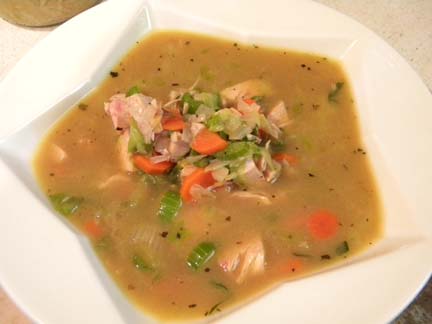
    Easy Delicious Pot of Soup

    Easy Pot of Soup or Homemade Soup Using Your Homemade Stock

    • 8 cups homemade stock (see recipes and more instructions below)
    • 1 chopped onion
    • 2 carrots, sliced
    • 2 cups cauliflower broken into small pieces
    • 2 zucchini squash, peeled and seeds removed (if any viable ones are present) and diced

    Bring stock to a boil and add vegetables. Once again bring to a boil, and then lower heat until the soup is on a simmer. Cook for twenty to thirty minutes, testing the vegetables to make sure they are very soft, this makes them easier to digest. Add in the meats and other soft tissues (you may wish to blend the soft tissues first so as to make the soup more palatable). An easy way to make a nice creamy soup is to blend the vegetables and stock, and “soft bits” and then add in pieces of meat to the creamed soup.

    More Information on Stock while on GAPS

    Dr. Natasha outlines the GAPS nutritional protocol on her website and gives a recipe for Introduction Soup, I’m going to convert that recipe into standard recipe format to make it easier to get started.

    Please note there is a difference between meat stock and bone broth. Many people coming to GAPS assume they are making bone broth, but the process which Dr. Natasha describes on her site for making Introduction Soup is meat stock. She has also answered a question regarding meat stock and bone broth in her Frequently Asked Questions page:

    When making broth, is there any nutritional difference between shorter cooking times as described in the GAPS book and extended cooking times as recommended by WAPF? What about adding vinegar while cooking?

    In the GAPS book I have described how to make meat stock. There is a difference between meat stock and bone broth. Meat stock is made with raw meat on a bone and it needs to be cooked just long enough to cook the meat thoroughly (2-3 hours), so it can be eaten, and so the bone marrow can be taken out of the bone and consumed. The meat stock made this way is usually clear and delicious, with an excellent nutritional value: it is particularly rich in amino acids. Bone broth is made out of bones which can be raw or cooked or a mixture (many people collect cooked bones from their meals, keep them in the freezer and use them for making the broth). In order to leach minerals out of the bones we add vinegar to the water. It is not necessary to add vinegar to the meat stock unless you need it for a particular taste. Bone broth may have quite a different nutritional composition from the meat stock and a different taste. Both are beneficial and should be used in GAPS diet.


    Dr. Natasha says:

    Add some probiotic food into every bowl of soup (the detail about introducing probiotic foods follow). Your patient should eat these soups with boiled meat and other soft tissues off the bones as often as he/she wants to all day.

    Meat Stock

    • joints, bones, a piece of meat on the bone, a whole chicken, giblets from chicken, goose or duck, whole pigeons, pheasants or other inexpensive meats. (“It is essential to use bones and joints, as they provide the healing substances, not so much the muscle meats. Ask the butcher to cut in half the large tubular bones, so you can get the bone marrow out of them after cooking.“)
    • water to cover
    • unprocessed salt to your taste
    • about 1 teaspoon whole black peppercorns, roughly crushed

    Fish Stock

    • whole fish or fish fins, bones and heads
    • water to cover
    • unprocessed salt to your taste
    • about 1 teaspoon whole black peppercorns, roughly crushed

    Basic Chicken Stock Simplified (here I will give you an actual recipe that I use based on Dr. Natasha’s instructions)

    • 1 whole chicken
    • 12 cups water
    • Unprocessed salt to your taste
    • 1 teaspoon whole black peppercorns, roughly crushed

    Bring to a boil. After one-half hour, remove the scum that risen to the top.

    Continue to simmer for 2 to 2.5 hours. Remove the bones and meat to separate bowl, and strain the stock to remove small bones and peppercorns. Separate the meat from the bones and other pieces. Your strained chicken stock can be served to your patient, or you can make your first pot of homemade soup.

    Basic Chicken Stock Intermediate (although Dr. Natasha says to start this from the get-go I found it hard to incorporate the “soft bits”, marrow, etc. immediately so I have separated the two basic chicken stocks)

    • 1 whole chicken
    • 12 cups water
    • Unprocessed salt to your taste
    • 1 teaspoon whole black peppercorns, roughly crushed

    Bring to a boil. After one-half hour, remove the scum that risen to the top.

    Continue to simmer for 2 to 2.5 hours. Remove the bones and meat to separate bowl, and strain the stock to remove small bones and peppercorns. Separate the meat from the bones and other pieces. Your strained chicken stock can be served to your patient, or you can make your first pot of homemade soup.

    Here’s the intermediate part. Remove all the soft tissues from the bones as best as you can to add to soups. Soft tissues as I understand it are basically anything “soft” that could be blended. Also, cooking the gelatinous soft pieces for a longer cooking period will cause them to completely melt. Take care that you do not include any pieces of bone or hard pieces as you will cause the texture to become grainy which can be unpalatable. Remove bone marrow from bones while they are warm, for chicken bones this would be accomplished by cracking open the chicken leg bones and thigh bones. If they are cooked long enough, they will simply crumble.

    Dr. Natasha says about these stocks:

    The gelatinous soft tissues around the bones and the bone marrow provide some of the best healing remedies for the gut lining and the immune system; your patient needs to consume them with every meal. Keep giving your patient warm meat stock as a drink all day with his meals and between meals. Do not use microwaves for warming up the stock, use conventional stove (microwaves destroy food). It is very important for your patient to consume all the fat in the stock and off the bones as these fats are essential for the healing process. Add some probiotic food into every cup of stock (the details about introducing probiotic foods follow).

    Okay, now it’s time for homemade soup using your homemade stock. Dr. Natasha mentions these vegetables specifically:

    Recommended Vegetables for Intro Soups

    “You can choose any combination of available vegetables avoiding very fibrous ones, such as all varieties of cabbage and celery. All particularly fibrous parts of vegetables need to be removed, such as skin and seeds on pumpkins, marrows and squashes, stock of broccoli and cauliflower and any other parts that look too fibrous. Cook the vegetables well, so they are really soft.”

    • Onions [affiliate link]
    • Carrots (remove skin)
    • Broccoli (remove fibrous parts)
    • Leeks
    • Cauliflower (remove fibrous parts)
    • Courgettes
    • Marrow
    • Squash (remove seeds and in winter squash, the skin)
    • Pumpkin [affiliate link] (remove seeds and skin)

    Vegetables to Avoid for Intro Soups

    • Celery
    • Cabbage

    It’s so easy to make a pot of soup and get started on GAPS. The healing properties of broth are enormous and if you are interested in learning more please go here to read a white paper which will tell you all you ever wanted to know about broth: Traditional Bone Broth in Modern Health and Disease by Allison Siebecker. She defines what broth is, explains the basic method for making it, describes the nutritional content from the connective tissue, bones, bone marrow, cartilage, collagen, gelatin [affiliate link], and then explains the amino acid profile of broth, and she discusses the minerals and macrominerals in broth. She also gives an extensive list of conditions which can benefit from adding broth into the diet. Quite a complex and informative read about broth which I highly recommend.

    If you love recipes like this, I have two cookbooks you really need to check out ASAP! Beyond Grain and Dairy for gluten-free recipes and Winter Soups.

    GAPS DIET JOURNEY is a participant in the Amazon Services LLC Associates Program, an affiliate advertising program designed to provide a means for sites to earn advertising fees by advertising and linking to AMAZON.COM. GAPS DIET JOURNEY is an affiliate for several companies and may be compensated through advertising and marketing channels. Therefore, this post may contain affiliate links.

  • Pad Thai Grain Free Soy Free GAPS Friendly

    Pad Thai Grain Free Soy Free GAPS Friendly

    Pad Thai Gluten Free Grain FreeRecently on the GAPShelp Yahoo Group a post came through mentioning a contest post over at Mark’s Daily Apple, which listed 19 pages of comments for folk’s favorite paleo recipes. One of my list mates mentioned this Paleo Pad Thai recipe from Melissa Joulwan’s Well-Fed.

    Now, I’ve never had Pad Thai. Furthermore, I’d never heard of such a thing. But as I looked at the recipe, I became enamored with the thought of making it, especially since serendipitously I’d just been gifted two 10 ounce bags of Trader Joe’s organic sugar snap peas. Also, my husband had baked some chicken thighs, and I had been trying to figure out something to use my sesame tahini I’d recently bought. I thought I could figure some way to incorporate it into this recipe.

    The original recipe is not GAPS-friendly, and Mel from Well Fed says this about her version:

    Sometimes you just want a pile of something spicy-creamy-comforting… like Pad Thai. But the original dish includes rice noodles (fail), soy sauce (fail), peanuts (fail), and sugar (fail). To make it safe for dino-chow consumption, I replaced the noodles with spaghetti squash, used coconut aminos instead of soy, recruited Sunbutter sauce as a stand in for the peanuts, and added snap peas for sweetness that also bumped up the veggie count.

    THIS is Pad Thai you can feel good about emotionally and physically. I think it does a damn fine job recreating the taste and experience of eating the real deal. The mouth-feel of the spaghetti squash and sunshine sauce is pretty damn close to tender rice noodles – without the troublesome grain-poisons.

    Y’all should know by now I can’t seem to stop myself from going rogue when following a recipe, so mine is a bit different from Mel’s. I didn’t have sunflower butter on hand, but I did have roasted almond butter [affiliate link] and sesame tahini. I did a quick search on the Internet to find a recipe for my sauce, and found this one: Thai Sesame Peanut Sauce from The Wannabe Chef, which I also tweaked. 🙂  I did not have roasted red chili paste on hand (not sure of a GAPS legal version anyway) which the author state, “If you can’t find roasted red chili paste, it’s basically just red chilis, fish sauce, garlic, and a heck of a lot of sodium.” All righty then… no fish sauce on hand. So I searched Google and found if you don’t have sardines on hand, you can use fish sauce, so I figured if I don’t have fish sauce, I’ll use sardines, which I did have on hand.

    So here’s my recipe:

    Thai Sesame Almond Butter Sauce

    • 1 T. sardines (or 2 T. if you want more “fishy” flavor)
    • 1 T. almond oil
    • 1 T. Coconut Secret Coconut Aminos
    • 1/4 cup roasted tahini
    • 1/4 cup roasted almond butter
    • 1 T. crushed garlic (about four cloves [affiliate link])
    • 1 T. honey [affiliate link]
    • 1 t. chili flakes (or less if you don’t like things too hot)
    • 1 t. sea salt [affiliate link]
    • 1 t. chili powder [affiliate link]

    Blend the sardines, almond oil and coconut aminos together so that the sardines are completely liquified. Add the remaining ingredients and mix together well. You’ll come up with a paste that looks like this:

    Thai Sesame Almond Butter Tahini Sauce Ingredients Peanut Butter Free

    Thai Sesame Almond Butter Tahini Sauce Ingredients

    Okay, now for the rest of the recipe:

    • 3 zucchini squash, julienned
    • 10 ounces sugar snap peas, sliced into slivers
    • 1 onion, sliced thin
    • 6 chicken thighs
    • 3 eggs [affiliate link]
    • coconut oil [affiliate link]
    • 1 batch Thai Sesame Almond Butter Sauce (above)

    Serves 3.

    Place chicken thighs in a pan, drizzle butter on the skins, salt and bake for one hour at 400°F or until tops are golden and juices run clear (internal temperature should be 165°F). Remove skins and roll up to place on the side of the dish. Remove meat to add later to dish.

    While the chicken thighs are baking, heat about 1 tablespoon coconut oil in a skillet over medium-high heat. Saute the sugar snap peas until they turn bright green.

    Pad Thai Sugar Snap Peas

    Remove from the skillet, add more coconut oil and saute the onions [affiliate link] until they are transparent. Remove from skillet.

    Julienne three zucchini squash, remove strips until you get to the core where the seeds are. Add more coconut oil, sauté until soft.

    Using a griddle or another skillet, grease well and heat. Scramble one egg and pour onto the hot griddle. Use a spoon to spread the egg around to cover the area of the pan. Allow to cook until browned, then slide spatula under the egg and flip to the other side and allow to cook a little longer. Do the same with the other two eggs. Layer the egg “pancakes” one on top of the other, then take a knife or pizza cutter and slice the eggs into 1/2″ thick “noodles”.

    Gluten Free Egg "Noodles"

    When the zucchini squash is tender, remove it from the skillet. Strain it to remove any addition liquids as this will dilute the sauce and the taste and texture will be different. Now add the drained zucchini, and the sugar snap peas and onions back into the skillet and heat them up again. Add the egg noodles, and the chicken, and the sauce. Fold everything in carefully and heat thoroughly. Serve. Include rolled chicken thigh skins on the side, they are just so yummy! This was my extra addition to include them on the side.

    Pad Thai Ingredients

    Pad Thai in the Skillet

    Okay, so this meal was so delicious that the very next night I made the same thing again. I tweaked the recipe a little, but found that I liked the first night’s version better – this is why I know if you double the sardines you’ll get a slightly more fishy taste. It was okay either way, but I think I like the less fishy taste best. It’s not really all that fishy tasting, it is very slight. The eggs cooked as noodles were just so yummy, the mouth feel was very much like noodles! I really liked the sauce that I made for this dish.

    My oldest son loved this dish. I served the two of us dinner, and I had enough left over for lunch the next day. It was delicious rewarmed the next day.

    Like I said, I have never had Pad Thai before, so I don’t know how to compare this version to the real thing. I can only say I thought it was fantastic and I’m looking forward to making it again. My mouth is watering just looking at it.

    Let me know if you try it, okay?

    Recipe: Pad Thai Grain Free Soy Free GAPS Friendly
    Author: 
    Serves: 3 svgs
     
    Ingredients
    • Thai Sesame Almond Butter Sauce
    • 1 T. sardines (or 2 T. if you want more “fishy” flavor)
    • 1 T. almond oil
    • 1 T. Coconut Secret Coconut Aminos
    • ¼ cup roasted tahini
    • ¼ cup roasted almond butter
    • 1 T. crushed garlic (about four cloves)
    • 1 T. honey
    • 1 t. chili flakes (or less if you don’t like things too hot)
    • 1 t. sea salt
    • 1 t. chili powder
    • 3 zucchini squash, julienned
    • 10 ounces sugar snap peas, sliced into slivers
    • 1 onion, sliced thin
    • 6 chicken thighs
    • 3 eggs
    • coconut oil
    • 1 batch Thai Sesame Almond Butter Sauce (above)
    Instructions
    1. Place chicken thighs in a pan, drizzle butter on the skins, salt and bake for one hour at 400°F or until tops are golden and juices run clear (internal temperature should be 165°F).
    2. Remove skins and roll up to place on the side of the dish.
    3. Remove meat to add later to dish.
    4. While the chicken thighs are baking, heat about 1 tablespoon coconut oil in a skillet over medium-high heat.
    5. Saute the sugar snap peas until they turn bright green.
    6. Remove from the skillet, add more coconut oil and saute the onions until they are transparent. Remove from skillet.
    7. Julienne three zucchini squash, remove strips until you get to the core where the seeds are. Add more coconut oil, saute until soft.
    8. Using a griddle or another skillet, grease well and heat.
    9. Scramble one egg and pour onto the hot griddle.
    10. Use a spoon to spread the egg around to cover the area of the pan.
    11. Allow to cook until browned, then slide spatula under the egg and flip to the other side and allow to cook a little longer.
    12. Do the same with the other two eggs.
    13. Layer the egg “pancakes” one on top of the other, then take a knife or pizza cutter and slice the eggs into ½” thick “noodles”.
    14. When the zucchini squash is tender, remove it from the skillet.
    15. Strain it to remove any addition liquids as this will dilute the sauce and the taste and texture will be different.
    16. Now add the drained zucchini, and the sugar snap peas and onions back into the skillet and heat them up again.
    17. Add the egg noodles, and the chicken, and the sauce.
    18. Fold everything in carefully and heat thoroughly.
    19. Serve.

    Save
    If you love recipes like this, I have two cookbooks you really need to check out ASAP! Beyond Grain and Dairy for gluten-free recipes and Winter Soups.

    Save

    GAPS DIET JOURNEY is a participant in the Amazon Services LLC Associates Program, an affiliate advertising program designed to provide a means for sites to earn advertising fees by advertising and linking to AMAZON.COM. GAPS DIET JOURNEY is an affiliate for several companies and may be compensated through advertising and marketing channels. Therefore, this post may contain affiliate links.

  • My Visit With the New Naturopath

    Last week I had a visit with a naturopath to begin my journey of finally addressing my hypothyroidism. I began addressing my adrenal fatigue when I had my saliva test a few months ago, and so the next step is looking into my thyroid.

    The visit went pretty good. We are not exactly on the same page, but close enough. As I anticipated, Dr. E was okay with my using the hydrocortisone cream, but she feels I’m on a “pretty big dose”. Right now I’m on 27.5mg daily, and from my research that is not really a “big” dose. She said she would like to prescribe the pills but she would put me on a “much smaller” dose. Since I seem to need the amount I’m using right now, we agreed that I would just continue with what I’m doing. It’s true that this product is a steroid, granted it is in a form that is similar to what our body produces, but it is still a steroid, and I’m not real happy about needing to use it. She also doesn’t want to see me on HC for longer than six months, and she has the impression I’ve been on it for three months. That misunderstanding came about because she asked when I began using the HC, and I told her on August 29th, but then admitted to using it on occasion for stress dosing since June. So she got into her head that I’ve been on it three months, and would like to see me taper off by six months.

    She did acknowledge understanding the purpose for using HC, which was big to me. And she also said she would like to help me cut down on the amount I’m using while beginning an adrenal support, and slowly increase that while decreasing the HC. This sounds like a good idea.

    To be honest, I’d love to see myself off the HC tomorrow and at most six months, but I realize that may not be too realistic at this point in my life. I was so ecstatic to be off my asthma medication and it really bothers me to be currently dependent on this over the counter medication. But I believe it is for a short period of time only, to give my adrenals the chance to rest and heal. I guess I just need to take it one day at a time and see how it goes. If we get to six months and I try to taper and I’m wiped out, then I can’t see that she’ll expect me to become a zombie.

    She mentioned that she would like to have some baseline tests done, and I shared the list of tests I wanted to have done. She was okay with all of them, and she wrote out the prescription. The only thing we differed on is the aldosterone test. She wants me to do a 24 hour urine collection for this test, and her office staff told me she said there is no problem with eating my normal amount of salt, and they also didn’t think the HC was a problem. However, from my research I see that I should avoid salt for 24 hours, and also I should not take HC before the blood draw. I will wait to do the urine collection until I am able to clarify with her next week. I wonder if she responds to email?

    Oh, she did sell me a bottle of DHEA, and asked me to take it in the morning with my first dose of HC. It is a 25mg pill and I am told that is a whopping amount for a woman to take, more like the amount a man would need, and furthermore DHEA lowers cortisol. So I would be applying HC (cortisol) and taking a pill to lower it. Not the goal I have in mind. This concerns me a little bit that she made this suggestion, and I’m also annoyed with myself that I bought the product – it was $16. I have a hard time saying no to things like that. Now I have this bottle of product that I cannot and will not be using, and they don’t take back anything. Once you buy it, no returns or refunds…

    I had my blood drawn on Friday morning. I had to fast since midnight. I was pretty much okay on the way there and that kind of surprised me and also was encouraging because I was able to make it without my morning dose of HC. I did bring food with me to eat after the blood draw, and also applied the HC.

    I was super careful to stay off salt and oh was that a challenge for me. I am well known for my love of salt. I currently take 16 ounces morning and night with a level teaspoon of Celtic sea salt [affiliate link]. I love it, and I feel much better when I drink it to start my day and just before going to bed.

    I still have too much stress going on in my life though. Two big things that are happening right now is my job and our personal income taxes. I filed an extension and I need to be done by October 15th, which is less than two weeks from now. I’ve also misplaced my code for the software and so I might need to actually mail our return, instead of printing it and mailing it. And I just realized it’s not due until October 17th, so I’ve got a couple more days. At my job we are being forced to comply with the state and learn a new billing system and I am the person responsible for helping everyone else get comfortable with the system. So I am spending a lot of time on this new billing system, and in the meantime I am behind on accounting tasks, and this week we have an event being held on Thursday night, which I am obligated to attend. I would need to be on my deathbed in order to not show up.

    I won’t be able to see my lab results until the following week, since my doctor wants me to come in and talk to her about the results before I get to see the labs myself. Since work is so crazy busy I can’t take the time to go to a doctor’s appointment. It will work out okay though since this gives me time to get clarification on the aldosterone testing before going through the hassle of collecting my urine for twenty four hours. Ugh.

    All said, I guess it went pretty good. She listened to my whole entire story about what I think is going on, and why I got so stressed out. I brought Dr. Natasha’s Gut and Psychology Syndrome book with me, and showed it to her. I don’t remember if she had heard of the diet before, but she took down the title. I also shared with her my list of healing from my first six months on GAPS. She seemed impressed, and she was really pleased with the healing I’ve done so far.

    Something else I really liked about her office was when I first arrived and they took my blood pressure, it was a “little high” if I remember correctly it was something like 146/84. I mentioned that my wrist cuff indicated it was typically around 120/80 and she said they would do a second reading after I talked to the doctor to see if it would go down, and if not she would like me to bring my wrist cuff in and we could check and see how it compared to her reading the next time. After I talked to the doctor they took my blood pressure again and it was down to 124/73 which the doctor was happy to see that.

    I have never had a doctor take my blood pressure a second time to see if it would go down.

    Also, I have never had an hour appointment with a doctor, so that was very nice. The initial consultation visit was $175 for one hour, and follow up visits are $75 for half an hour.

    Oh, they did ask me to step on the scale. I never did update at the blog here with my September 1 weight, but it was 179. At the doctor’s office it was 185, and I stepped on the scale here at home today and it was 184. I’m not too worried… anyway… I understand I may be gaining some weight due to my body healing itself as I begin to address the thyroid issue.

    The doctor mentioned something about Wilson’s with regards to my thyroid, and she also, curiously, said something like maybe my tests would come back not showing that I had any thyroid problems. That would be interesting indeed, and frustrating since I would then have to start trying to figure out what is wrong with me all over again. I am pretty sure it is thyroid though, since this problem runs in my family. I just want to address it, and feel better! I have a lot of responsibility in my life, and I need to be functioning at my very best.

    I’ll let you know when I learn more about what is going on with me. In the meantime, have a wonderful day!

    GAPS DIET JOURNEY is a participant in the Amazon Services LLC Associates Program, an affiliate advertising program designed to provide a means for sites to earn advertising fees by advertising and linking to AMAZON.COM. GAPS DIET JOURNEY is an affiliate for several companies and may be compensated through advertising and marketing channels. Therefore, this post may contain affiliate links.